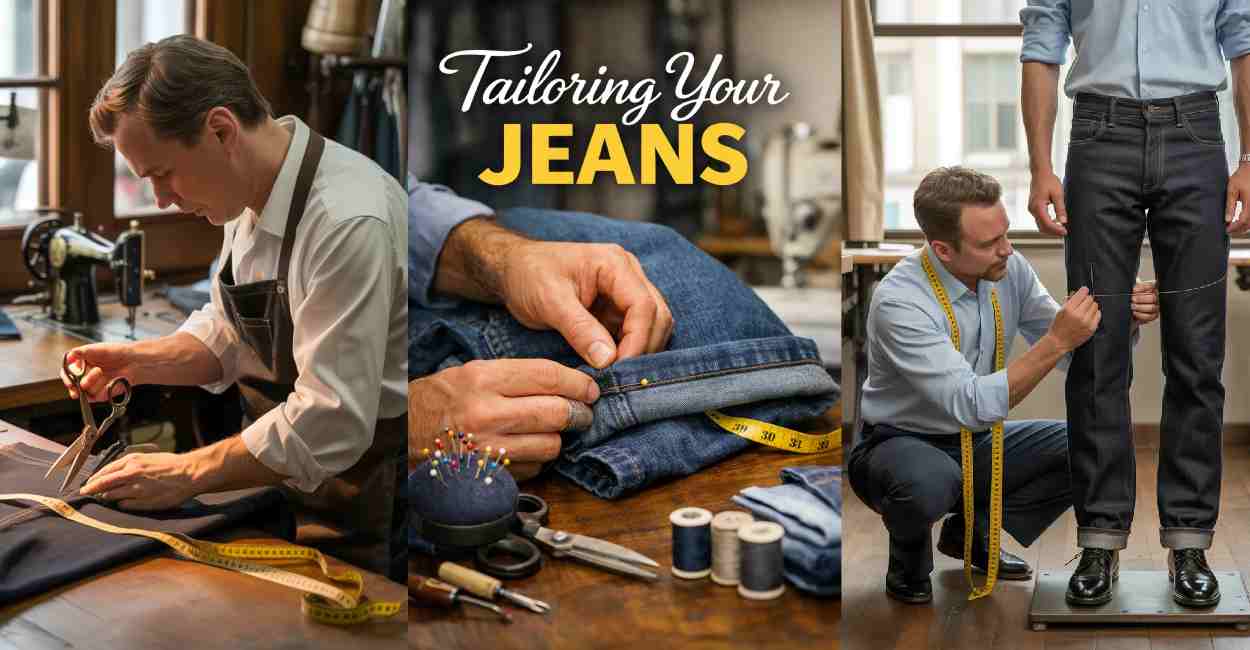
From Good to Great: The Magic of Tailoring Your Jeans
Jeans are more than just a staple in our wardrobes—they’re a symbol of comfort, style, and confidence. Let’s be honest: discovering the ideal pair from the store can often seem like hunting for a needle in a haystack. Enter tailoring—the secret to transforming those almost-perfect jeans into your best-fitting, most flattering pair. Whether it’s shortening the hem, slimming the waist, or refining the fit, a good tailor can elevate your denim game. But how do you know when it’s worth the investment? And what should you ask for? Let’s dive into the world of denim tailoring and unlock your jeans’ true potential.
Why Consider Tailoring Your Jeans
- Achieve the Perfect Fit: Off-the-rack jeans often don’t cater to every body shape. Tailoring helps you achieve a fit that flatters your unique body, ensuring comfort and style.
- Maximize Comfort: Jeans that are too tight or too loose can be uncomfortable. Tailoring allows you to adjust the waist, rise, and leg openings for a more relaxed fit.
- Extend the Life of Your Favorite Pair: If you have a favorite pair of jeans that no longer fits quite right, tailoring can save them from being discarded, allowing you to continue enjoying them.
- Look More Polished: Well-tailored jeans elevate your overall appearance. Whether for casual outings or semi-formal occasions, the right fit makes a noticeable difference.
- Save Money in the Long Run: Instead of buying new jeans every time your old ones fall out of shape, tailoring is a more affordable and sustainable solution.
- Personalize Your Style: Tailoring gives you the chance to customize your jeans to your exact style preferences, whether that’s a slimmer cut or a unique hemline.
Common Types of Jean Alterations
- Hemming for the Perfect Length: Tailors can shorten jeans to achieve the ideal length while preserving the original hem or creating a clean, custom finish. This ensures your jeans pair seamlessly with your shoes.
- Waist Adjustments: Taking in or letting out the waistband ensures a snug fit, eliminating gaps or discomfort, especially for high-waisted or fitted jeans.
- Tapering the Legs: For a slimmer, more modern look, tailors can narrow the leg openings, transforming straight or bootcut jeans into a sleek silhouette.
- Adjusting the Rise: Altering the rise (the distance between the waistband and crotch) improves comfort and overall fit, especially if the jeans feel too high or low-waisted.
- Replacing Zippers or Buttons: Worn-out zippers or missing buttons can be easily replaced, restoring functionality and style.
- Repairing Tears or Holes: Skilled tailoring can mend distressed jeans, reinforce weak areas, or even add patchwork to give them a trendy, customized look.
What to Ask for When Tailoring Jeans
- Desired Fit and Style: Be specific about how you want your jeans to fit—slim, relaxed, tapered, or straight. Describe the look you’re aiming for, such as cropped lengths or a tailored silhouette.
- Preservation of the Original Hem: If shortening the jeans, ask your tailor to retain the original hem for a seamless and factory-finished look.
- Comfort Adjustments: Mention any discomfort, like tightness in the thighs or looseness at the waist, so your tailor can address these issues.
- Proportional Balance: Ask your tailor to maintain proper proportions when altering multiple areas, such as the waist and hips, to ensure a natural look.
- Fabric Stretch Considerations: Inquire if the stretch or material type will affect how much alteration is possible without compromising the fit.
- Budget and Turnaround Time: Clarify the cost and time required for the alterations to avoid surprises and plan accordingly.
When Tailoring Might Not Be Worth It
- Excessive Size Changes: If the jeans are more than two sizes too big or too small, tailoring might distort their shape and fit, making them look unnatural or uncomfortable.
- Overly Complex Adjustments: Alterations like completely changing the rise, resizing intricate designs, or reworking stretch denim may require extensive labor, often costing more than buying a new pair.
- Low-Quality Jeans: Tailoring inexpensive or poorly made jeans might not be worth the investment, as the fabric or stitching may not withstand further adjustments or wear.
- Heavy Wear and Tear: Jeans with significant damage, such as large holes, weak fabric, or frayed seams, may not be salvageable even with expert tailoring.
- Cost Exceeding Value: When tailoring costs approach or exceed the price of new, higher-quality jeans, it may be more practical to invest in a new pair instead.
- Style Limitations: Certain designs, like extreme wide-leg or heavily distressed jeans, may not lend themselves well to alterations without compromising their original style.
- Limited Fabric for Adjustments: Jeans without sufficient seam allowance may not be adjustable, especially for waist or leg alterations.
Final Thoughts
Tailoring your jeans can be the secret to achieving a flawless fit that off-the-rack styles simply can’t provide. It’s an investment in comfort, style, and confidence, transforming your denim into something uniquely yours. While not every pair may be worth altering, knowing when to tailor and what to ask for ensures you get the most out of your wardrobe. Whether it’s perfecting the hem, slimming the legs, or saving a favorite pair, tailoring can breathe new life into your jeans. So, the next time you slip on a pair that’s almost perfect, consider tailoring—it might just make them your favorite.