

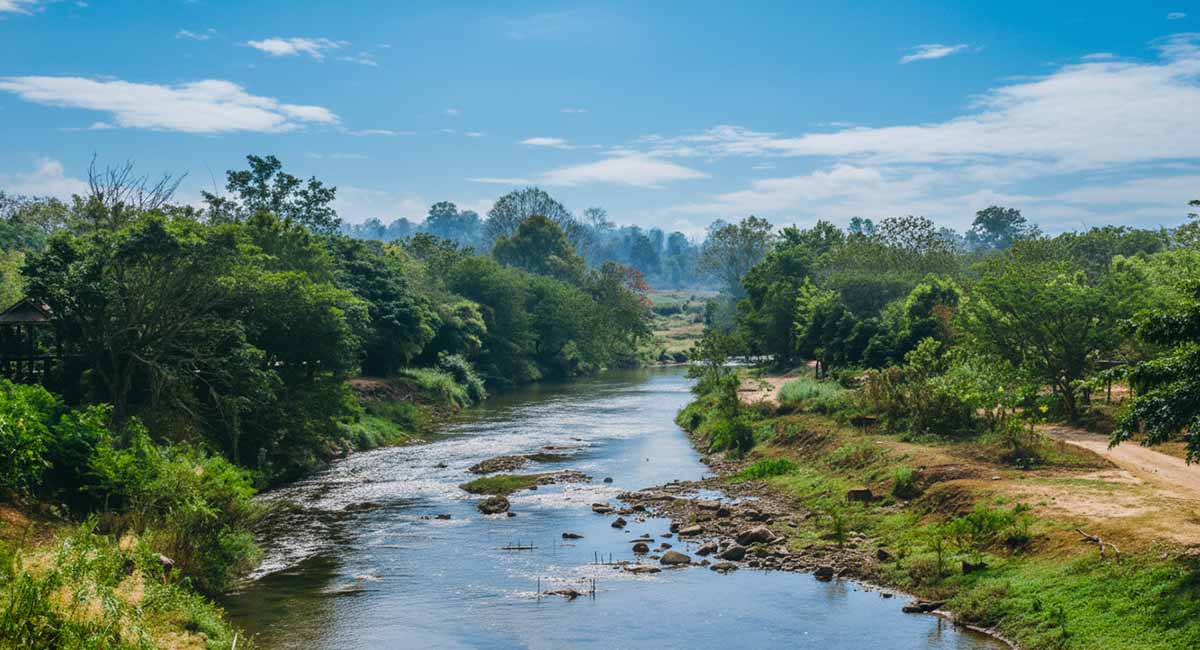
Salandi River
Situated in Odisha’s lush, verdant landscapes, the Salandi River is a ecologically significant waterway that weaves through the heart of the state’s natural and cultural heritage. Flowing primarily through the Bhadrak district, this river plays a vital role in irrigation, local livelihoods, religious practices, and regional biodiversity. While it may not boast the same fame as the Mahanadi or the Brahmani, the Salandi holds its unique charm, which deserves attention from nature lovers, environmentalists, and travelers alike.
Origins and Path
The Salandi River originates in the Meghasani hills in the Similipal Hill Range of Mayurbhanj district. Similipal is a biodiversity hotspot, home to the famous Similipal National Park and Tiger Reserve. From its hilly birthplace, the river flows southward into Bhadrak district, where it meanders through farmlands and villages before ultimately joining the Baitarani River, which eventually drains into the Bay of Bengal.
The river travels roughly 144 kilometers in total, touching various ecological zones. Along its course, it passes through forests, small towns, agricultural fields, and wetlands. One of the key aspects of the Salandi River is that it supports several tributaries and water bodies, which play a crucial role in the region’s agricultural economy.
The Salandi Dam – Lifeline of Bhadrak
Perhaps the most well-known artificial feature associated with the Salandi River is the Salandi Dam, also known as the Hadgarh Dam, built near Hadgarh in the Keonjhar district. Constructed in 1978, this dam was designed for irrigation purposes and supports thousands of farmers across the region. Over the years, it has also become a site for eco-tourism and fishing, offering scenic views of the surrounding hills and dense forests.
The reservoir formed by the dam has given rise to a wetland ecosystem that supports migratory birds, freshwater fish, and aquatic plants. It’s a well-liked weekend escape for residents and might be an ecotourism attraction for tourists searching for unusual places in Odisha.
Ecological Significance
One of the most essential functions of the Salandi River is its role in sustaining biodiversity. Its proximity to the Similipal Biosphere Reserve means its upper catchment is rich in flora and fauna. This includes several species of birds, reptiles, fish, and mammals. Local communities rely on the river for fishing, agriculture, and small-scale water-based industries.
In addition, the river helps recharge groundwater levels and sustains wetlands crucial for birdlife. During monsoon seasons, the river swells and brings fertile alluvium to the fields, ensuring productive agricultural cycles.
However, like many rivers in India, the Salandi faces ecological threats. Deforestation in the catchment areas, pollution from agricultural runoff, and sand mining are growing concerns. Environmental groups have received increasing calls to declare parts of the river basin as protected areas to preserve its ecological balance.
Cultural and Religious Relevance
The Salandi River holds cultural significance for many communities along its banks. In several villages, local deities are worshipped near the river, and rituals are performed during religious festivals. The river is significant during Makar Sankranti, Chhath Puja, and other local observances where water is ritualistic.
There are also small temples and ghats built along the river in Bhadrak district, where people come to perform daily rituals and prayers or immerse ashes of deceased family members. In this sense, the Salandi is not just a river but a spiritual entity—an embodiment of life and death, sustenance and salvation.
Tourism and Exploration
Although not widely known in the mainstream tourism circuit, the Salandi River and its surrounding areas offer ample opportunities for eco-tourism, bird watching, fishing, and nature walks. The nearby Hadgarh Wildlife Sanctuary is home to species like leopards, elephants, and various birds, making it an excellent destination for wildlife enthusiasts.
The Hadgarh Dam area is particularly scenic during the monsoon and winter when the reservoir is full and the forested hills are lush green. Boating is sometimes available during high water levels, and picnicking near the dam has become a common pastime for locals.
The river’s path also passes near small tribal settlements, offering a look into the indigenous cultures of Odisha. Visitors who are respectful and curious can learn much about traditional ways of life that have coexisted with nature for generations.
Final Thoughts
The Salandi River may not be as famous as other rivers in India, but it is no less critical. It sustains animals, feeds farms, generates income, and has significant cultural value for the Odisha people. As the world grapples with environmental crises and climate change, small rivers like Salandi remind us of the delicate balance between human life and nature.
One must look beyond the obvious to truly appreciate Odisha’s natural heritage truly. In the shimmering waters of the Salandi, flowing quietly through forests and farms, lies a story of life, resilience, and harmony waiting to be discovered.