

Pahili Raja Festival of Odisha
India is a land of festivals, each with its unique charm, rituals, and celebrations. Among these, one festival that stands out for its cultural and traditional significance is Pahili Raja, celebrated with immense fervor in Odisha. People celebrate Pahili Raja to mark the arrival of the monsoon season, honoring womanhood, fertility, and the earth through a blend of mythology, regional customs, and agricultural rituals. In this blog, we will delve into the history, customs, and unique elements of Pahili Raja, highlighting why it remains a significant festival in Odisha.
What Is Pahili Raja All About?
People celebrate Pahili Raja during the Raja Parba festival, which takes place in Ashadha (usually June or July). The festival typically spans three days, with Pahili Raja being the first day, followed by Raja and Basi Raja. It is a celebration of the agricultural season and the arrival of the monsoon rains, which are crucial for the farming community of Odisha. The word “Pahili” means “first” in Odia, and the day signifies the beginning of the festival.
Raja Parba is one of the few festivals in Odisha dedicated entirely to celebrating womanhood, especially the feminine aspect of fertility, growth, and the earth’s nurturing qualities. On this day, communities honor young girls and women, and the festival’s rituals express deep respect for them.
The Story Behind the Festival
According to local beliefs and mythology, Pahili Raja marks when the earth, personified as a woman, rests for a few days. Traditionally, people believe that during the first day of Raja Parba (Pahili Raja), the earth is in her menstrual cycle and must rest and rejuvenate. During this period, the Earth is free from agricultural activity. The second day, Raja, signifies the rejuvenation and fertility of the land, when the earth is ready to support new crops.
The festival holds great significance in terms of agricultural cycles, as it coincides with the commencement of the planting season. People believe that the rains brought by the monsoon will now begin to nourish the soil, allowing healthy crops to grow, especially rice, the staple food of the state.
Celebrating Womanhood and Femininity
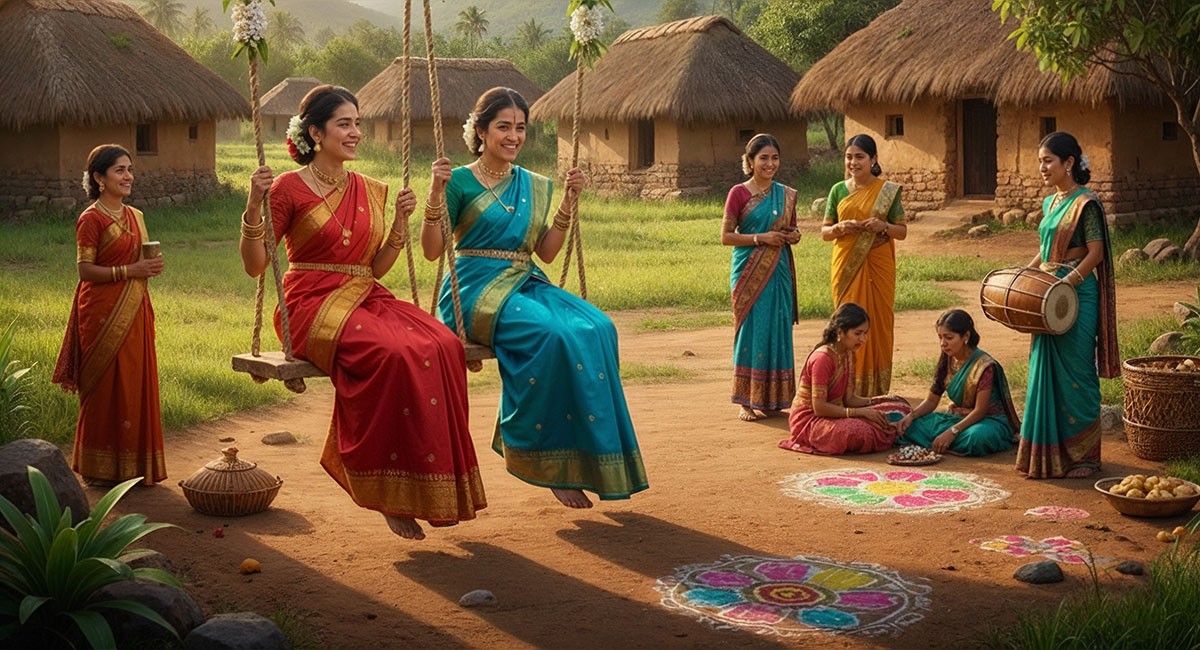
One of the most distinctive features of Pahili Raja is its focus on womanhood and fertility. The festival celebrates the feminine power and essence that embodies fertility, growth, and nurturing qualities. Women, especially young girls, take center stage in the celebration. On this day, women observe rituals, including sitting on swings, dressed in their best traditional attire, and adorning themselves with flowers and jewelry.
A major custom associated with Pahili Raja is that women refrain from physical work during the festival. This is considered a way to pay tribute to the earth, which is given rest and time to rejuvenate. It is also symbolic of women resting during their menstrual cycle, aligning with fertility and growth. The rituals and customs allow for a pause in the regular activities of the community and encourage social cohesion through shared celebrations.
Key Rituals of Pahili Raja
- Swinging (Raja Sankha): One of the most delightful aspects of the festival is the swinging activity. Women and young girls, dressed in beautiful sarees, playfully swing on specially decorated swings, often made of bamboo and tied between two trees. The swings symbolize the movement of life and the earth’s rejuvenation, with the gentle motion embodying fertility and prosperity.
- Traditional Foods: The festival is also a time to indulge in conventional Odia delicacies. Special foods like Pakhala Bhata (fermented rice with curd), Raja Pitha (a sweet dish made of rice flour and jaggery), and Manda Pitha (steamed rice cakes) are prepared and served during the festival. These foods, rich in local ingredients, have cultural and symbolic value. For example, Raja Pitha is prepared with rice flour, symbolizing the land’s harvest, and is considered an offering to the earth for a bountiful crop.
- Attire and Jewelry: Women dress in their finest traditional clothing, which often includes brightly colored sarees, and jewelry made of gold and silver. Their attire, adorned with flowers, reflects the celebration of nature and the earth’s vitality.
Observing Silence and Rest: On Pahili Raja, women and young girls are expected to observe rest and refrain from doing household work. This period encourages self-care and honors women as nurturers of life, mirroring the earth’s role during the monsoon season.
Festival Duration
Raja Parba is celebrated over four days, though the first three are the most prominent:
- Pahili Raja – First Day
- Marks the beginning of Raja Parba
- Believed to be the day when Mother Earth enters her period of rest
- Agricultural work, ploughing, and digging are strictly avoided
- Mithuna Sankranti (Raja) – Second Day
- The main day of the festival
- Coincides with the solar transition of Mithuna (Gemini)
- Swings, games, pithas, and cultural activities are at their peak
- Basi Raja – Third Day
- A quieter continuation of celebrations
- Rest, leisure, and social gatherings continue
- Basumati Snana – Fourth Day
- Observed mainly in rural areas
- Represents the ritual bathing of Mother Earth
- Marks the end of Raja Parba and resumption of farming activities
Time of Observance
- Rituals generally begin early in the morning
- Swings, games, and community activities continue throughout the day
- Special foods are prepared during daytime, with family gatherings in the evening
Community Involvement
Although Pahili Raja is primarily a festival for women, it also involves the entire community’s participation. Men and children also participate in the celebrations by helping prepare swings, decorating the surroundings with flowers, and preparing traditional sweets. Songs, dance, and communal participation create a vibrant atmosphere that strengthens unity and social bonding.
Why It Matters Today
Over the years, Pahili Raja has become integral to Odisha’s cultural fabric. While the traditional customs remain strong, the celebration of Pahili Raja has evolved to include a greater emphasis on community events, especially in urban areas like Bhubaneswar and Cuttack. Schools and local organizations often organize swings and cultural programs, where young girls participate in traditional dance performances and competitions.
Even with modernization, Pahili Raja retains its cultural roots, celebrating the eternal bond between nature, womanhood, and fertility. The festival reminds people of the importance of respecting the cycles of nature and honoring the feminine principle, not just as a biological concept but also as a spiritual one.
Final Thoughts
Pahili Raja in Odisha is more than just a local festival; it celebrates the earth, fertility, and womanhood. The blend of mythology, agricultural traditions, and customs makes it a unique cultural event in the state. Through rituals like swinging, offering traditional foods, and observing rest, the festival fosters a sense of community, reverence for nature, and acknowledgment of women’s societal roles. It is a reminder of the eternal connection between human life and the rhythms of nature, making Pahili Raja a truly special occasion for the people of Odisha.