Ornaments of Dongria Kondh: Tradition Worn with Pride
Situated in the verdant Niyamgiri Hills of Odisha, India, the Dongria Kondh community is one of the country’s most intriguing and visually distinct indigenous groups. People admire the Dongria Kondhs for their strong guardianship of nature, sustainable lifestyle, and rich cultural expressions, particularly their striking, symbolic ornaments. Far beyond mere decoration, these ornaments represent identity, social status, spiritual beliefs, and the group’s deep-rooted connection with nature and their ancestral homeland.
This blog delves into the diverse ornaments worn by the Dongria Kondh people, exploring their types, materials, cultural meanings, and roles in everyday life.
Cultural Background of the Dongria Kondh
The Dongria Kondh are a Dravidian-speaking tribal group that is officially designated as a Particularly Vulnerable Tribal Group (PVTG) in India. Residing in the Niyamgiri range, their very name is derived from the word Dongar, meaning hill, highlighting their intrinsic connection with the mountainous terrain they call home. Deeply spiritual, the community follows animistic beliefs and worships Niyam Raja, a supreme deity believed to inhabit the forests and hills.
In the Dongria Kondh worldview, everything, from their agricultural practices and festive rituals to clothing and jewelry, is imbued with purpose and symbolism. Among these cultural expressions, ornameare plays a central role, reflecting identity, history, spirituality, and social customs.
Ornaments of Dongria Kondh Women
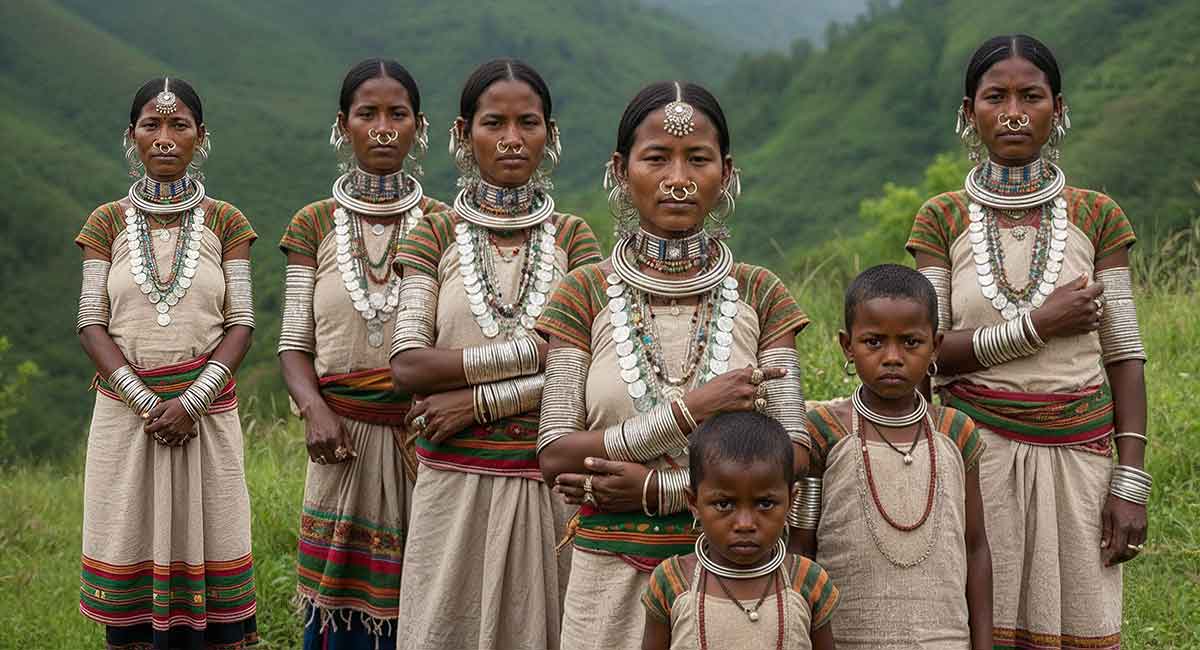
Dongria Kondh women are among the most visually recognizable tribal women in India, thanks to their vibrant attire and striking array of jewelry. What makes them particularly unique is the daily use of multiple ornaments, not reserved for special occasions, but worn regularly as part of their identity and way of life.
-
Nose Rings (Phuli and Nath)
Among the most iconic features of Dongria Kondh women’s attire are their nose rings, worn on both nostrils. These include small studs called phuli and larger rings called nath, typically crafted from brass or silver. These ornaments are associated with feminine beauty, auspiciousness, and marital status. Married women, in particular, wear these ornaments to symbolize commitment and fertility.
-
Earrings (Kundal and Bali)
Dongria women often wear heavy earrings, locally known as kundal or bali, usually made from brass, copper, or occasionally silver. People insert these into stretched earlobes as part of a traditional practice that marks adulthood and tribal pride. Elder women may wear multiple earrings that gently clink with movement, adding a musical rhythm to their every step.
- Necklaces (Mala and Hansuli)
Neck adornments range from delicate beadwork to robust metal pieces:
- Bead necklaces (Mala): Artisans often make these colorful ornaments from glass beads, seeds, or stones. The choice of colors and patterns can indicate clan identity or marital status.
- Hansuli: A distinctive, semi-circular metallic ornament worn close to the neck, the hansuli is usually crafted from brass or aluminum. It serves both as a visual centerpiece and a cultural marker of identity.
-
Hair Accessories (Juda and Clips)
People style their hair into buns or tie it back, adorning it with simple yet meaningful accessories. They secure these hairstyles with wooden or metal pins, and occasionally add fresh flowers for ceremonial or aesthetic purposes. These accessories reflect not just beauty but also respect for traditional grooming practices.
-
Armlets and Bangles (Baju and Chudi)
Arms feature baju (armlets) and chudi (bangles), typically crafted from brass, shell, aluminum, or colored glass. Women wear these in multiples, creating a rhythmic jingling sound as they go about their daily tasks—an audible expression of their cultural identity.
-
Anklets and Toe Rings
The Dongria Kondh do not overlook the feet in their adornment. Women wear payal (anklets) that produce a soft, pleasing tinkle while walking, while simpler toe rings signal marital status. These subtle elements add another layer of expression to their rich ornamental tradition.
Ornaments of Dongria Kondh Men
Although Dongria Kondh women wear more elaborate adornments, the men choose equally meaningful ornaments. Jewelry and accessories for men are often functional, spiritual, and symbolic during ceremonies and festivals.
- Earrings and Ear Studs
Many men wear small brass or silver studs, generally one per ear. Unlike women, they do not stretch their earlobes. These subtle accessories mark adulthood and are often seen as signs of courage and masculinity.
- Necklaces
Men often wear necklaces made from rudraksha beads, seeds, or bones. People believe these protect against ill luck or evil spirits and may serve a spiritual function. Some of these necklaces have been handed down through generations as heirlooms.
- Headgear and Hair Accessories
People tie their long hair into buns called esa and adorn them with feathers, wooden combs, or flowers. During celebrations, men may also wear decorative head wraps or floral crowns. These festive and traditional accessories reinforce male roles in tribal rituals and festivities.
- Armlets and Wristbands
Metallic or beaded armlets and wristbands symbolize strength and tribal bravery. Although simpler in design than women’s bangles, they still play a vital role in defining male identity, especially during festivals or dance performances.
Symbolism and Cultural Significance
The ornaments the Dongria Kondh wear are far more than decorative accessories—symbols of tradition, status, gender roles, and personal milestones. Each piece carries layered meanings:
- Girls begin wearing ornaments at puberty, symbolizing their passage into womanhood.
- People show their marital status by wearing specific ornaments, including nose rings and toe rings.
- People often pass down jewelry, which serves as treasured family heirlooms and preserves lineage.
- Ornaments play a role in courtship, as individuals adorn themselves to attract potential partners during festivals.
The materials used—metal, seed, bone, and glass—reflect the community’s connection with nature, as artisans craft each item from locally sourced materials or through traditional barter.
Final Thoughts
The ornamental traditions of the Dongria Kondh are not just relics of the past—they are living, breathing aspects of their identity. Each earring, nose ring, and necklace tells a story of ancestry, belief, and resilience. In a fast-changing world, these ornaments stand as symbols of a community that continues to uphold its values, respect nature, and celebrate its unique heritage.
Preserving these traditions is not merely about saving art or costume—it’s about honoring a worldview where culture, spirituality, and the environment are intricately intertwined. The ornaments of the Dongria Kondh are a testament to the enduring beauty of indigenous craftsmanship and the stories they carry through generations.