

Nagavali River: A Cultural and Lifeline
The Nagavali River, known as the Langulya River, is a vital waterway flowing through southern Odisha and northern Andhra Pradesh. Originating from the Eastern Ghats in Odisha’s Kalahandi district, it travels approximately 256 kilometers before emptying into the Bay of Bengal. Though lesser known than major rivers, Nagavali supports agriculture, drinking water needs, and traditional livelihoods in tribal regions like Rayagada and Koraput. It is also culturally significant, with temples and rituals linked to its waters, making it a lifeline for people and biodiversity.
Origin and Path
The Nagavali River originates in the Eastern Ghats, near Lakhbahal village in Kalahandi district of Odisha. From there, it courses through the Rayagada and Koraput districts before entering the Srikakulam district in northern Andhra Pradesh. After flowing for over 256 kilometers—nearly 161 of which are in Odisha—the river empties into the Bay of Bengal close to Kallepalli hamlet.
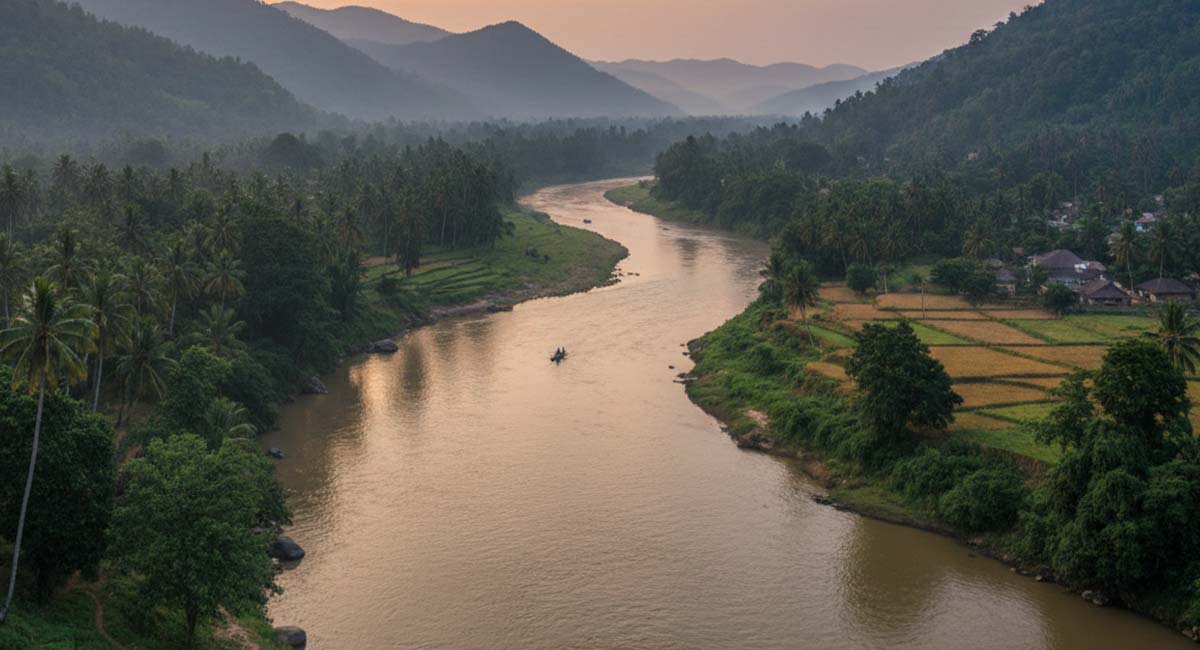
The river’s journey from the hilly terrains of Kalahandi to the coastal plains of Andhra Pradesh is marked by verdant forests, tribal settlements, and sprawling farmlands. It supports thousands of livelihoods and diverse fauna as it winds across this region. The river’s seasonal rhythm reflects the pulse of the communities along the river’s banks.
Tributaries and River System
Several tributaries originating in the rugged Eastern Ghats enrich the Nagavali River. Some of the major tributaries include:
- Jhanjabati River
- Suvanarekha Stream
- Gomukhi River
- Chuladhua Nalla
These tributaries play a crucial role in boosting the volume of the Nagavali, especially during the monsoon season. However, the river exhibits a seasonal flow pattern—it swells during the rains. It shrinks in the dry months, a cycle that poses opportunities and challenges for local agriculture, water supply, and fisheries.
Importance of the Nagavali River to Odisha
In Odisha, especially in the southern districts of Rayagada and Kalahandi, the Nagavali River is nothing short of a lifeline. Its waters irrigate thousands of hectares of farmland, ensuring the cultivation of essential crops such as paddy, pulses, and millets. For a largely agrarian and tribal population, this water source is crucial for both sustenance and economic activity.
The Jalaput irrigation project in Rayagada is a notable initiative that harnesses the Nagavali’s waters. It has significantly boosted agricultural productivity in the tribal belts of the region. Additionally, the river supports indigenous fish species, forming the backbone of small-scale fisheries that provide food and livelihood.
Interstate Projects and Water Management
The Nagavali River is central to several water management initiatives, often involving Odisha and Andhra Pradesh. The Neradi Barrage and the Vamsadhara-Nagavali interlinking project are key collaborative efforts to optimize irrigation and ensure equitable water distribution between the two states.
Though interstate disputes over water sharing have existed, continued dialogue and cooperation have paved the way for mutual agreements. Upcoming ventures like the Nagavali-Kolab Link Project are also in the planning stage, aiming to boost further water availability for drinking and irrigation in southern Odisha.
Cultural and Historical Significance of Nagavali River
Beyond its ecological and economic roles, the Nagavali River holds deep cultural and spiritual significance. Many tribal communities that live near the river revere it as a sacred entity, often addressing it as a mother figure in their folklore and rituals. These traditions are particularly evident during annual harvest festivals, where tribal communities gather near the riverbanks to perform ritual dances, offer prayers, and celebrate the land’s bounty.
One prominent religious site close to the river is the Maa Majhighariani Temple in Rayagada. Devotees visiting the temple often take a ritual bath in the Nagavali’s waters as part of their spiritual practice. The river has also witnessed the evolution of ancient settlements. Archaeological discoveries—including pottery shards, inscriptions, and tools—along the riverbanks suggest that the area has been inhabited for centuries, possibly dating back to early human civilizations.
Ecology and Biodiversity
The Nagavali River flows through sections of the Eastern Ghats, one of India’s recognized biodiversity hotspots. The surrounding forests are home to various flora and fauna, including elephants, leopards, langurs, barking deer, and numerous bird species. Seasonal wetlands formed along the river are a haven for migratory birds during winter, making these areas important for eco-tourism and birdwatching.
However, the river’s ecology faces growing threats. Unregulated sand mining, deforestation in upper catchments, and industrial or domestic pollution are contributing to the degradation of the river’s health. Conservationists are urging community-based resource management, stricter enforcement of environmental regulations, and greater awareness among local populations to ensure the river’s long-term sustainability.
Final Thoughts
While the Nagavali River may not be one of India’s most famous waterways, it is undoubtedly one of its most meaningful and life-giving rivers, particularly for southern Odisha and northern Andhra Pradesh. It feeds lands, sustains communities, preserves ecosystems, and nurtures age-old traditions.
Preserving the Nagavali maintains a vital chapter of India’s natural and cultural legacy. A tenacious symbol of balance and belonging in a constantly changing world, the river gently narrates the stories of forests, farms, faith, and buried history as its waters continue their ancient journey from the Eastern Ghats to the Bay of Bengal.