

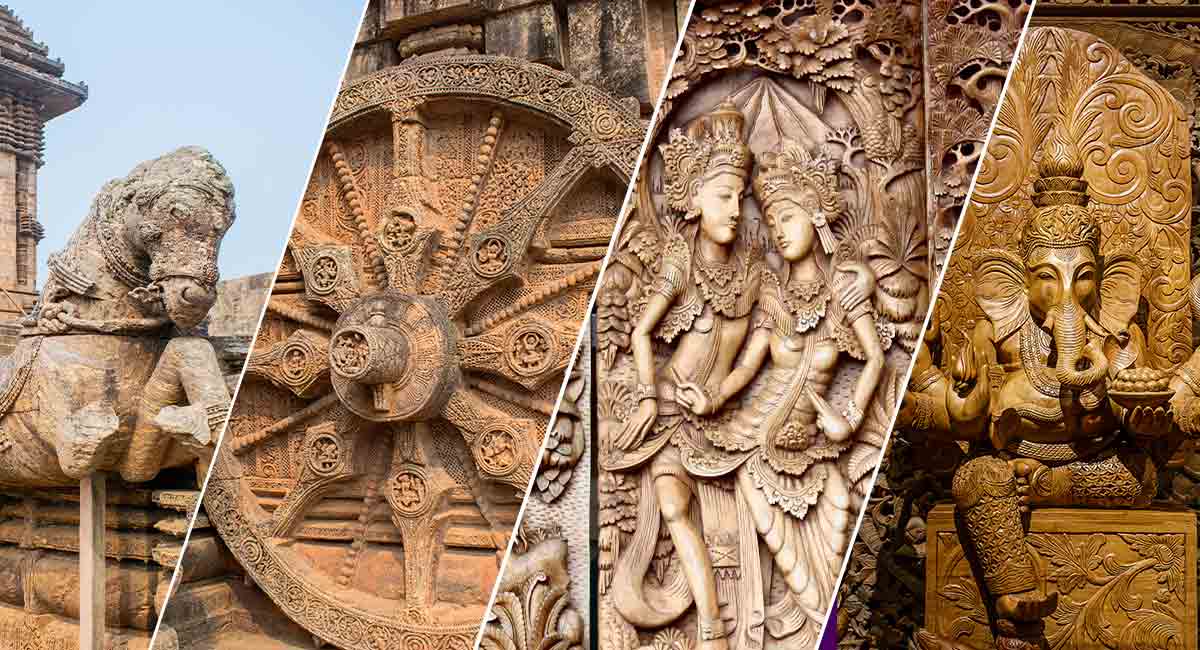
Khandapada: Known for Wood and Stone Carving
In the Nayagarh district of Odisha, Khandapada is a small yet culturally vibrant town that has earned regional recognition for its age-old tradition of wood carving and stone carving. These intricate art forms, rooted deeply in Odisha’s socio-cultural and religious fabric, represent a confluence of skill, devotion, and heritage that continues to thrive in the skilled hands of local artisans.
History of the Craft
The history of wood and stone carving in Odisha stretches back to ancient times, especially flourishing under the Kalinga dynasty. This period saw the creation of monumental temple architecture and sculpture, including iconic structures like the Konark Sun Temple and the Lingaraj Temple. While these grand edifices capture the limelight, smaller towns like Khandapada have played an equally crucial role in preserving and perpetuating the traditional art forms at a community level.
Once a princely state, Khandapada has retained its cultural importance through the ages. The royal families, temple authorities, and local communities historically patronized the local artisans. Their works adorned not only places of worship but also played a significant role in religious events such as Rath Yatras (chariot festivals), during which elaborately carved wooden chariots carried deities through the streets. Over the years, Khandapada has become known for producing highly skilled craftsmen who blend tradition with artistry in both wood and stone.
Wood Carving in Khandapada
Wood carving is a deeply respected and time-honored craft in Khandapada. Artisans in the region typically source durable and finely grained woods such as sal, teak, and gamhar locally and work with them. Wood carving begins with carefully seasoning the wood to prevent warping and ensure longevity. Once ready, the wood is marked with designs, after which the artisan painstakingly carves it using traditional chisels and hand tools.
Themes and Design Language –
Most wood carvings in Khandapada are rooted in religious and mythological themes. The epics of the Ramayana and Mahabharata serve as rich sources of inspiration. Artisans commonly craft figures of deities such as Lord Jagannath, Lord Krishna, Goddess Durga, and Ganesha. These depictions often find their place in homes, temples, and ceremonial spaces.
A particularly celebrated aspect of Khandapada’s craftsmanship is its contribution to the Rath Yatra tradition, especially the wooden chariots of Lord Jagannath, which feature ornate carvings. Beyond religious figures, artisans also create household décor items such as intricately carved door frames, furniture, decorative panels, and pillars. These often feature symbolic elements like lotus flowers, peacocks, and other regional motifs.
A distinguishing feature of Khandapada’s wood carving is its layered relief work, which adds depth and movement to each piece. This three-dimensional quality gives the carvings a dynamic appearance and differentiates them from conventional forms.
Stone Carving in Khandapada
Parallel to its woodcraft, Khandapada is equally known for its rich stone carving tradition, which aligns closely with Odisha’s temple architecture. The region is abundant in sculptural stones like soapstone, sandstone, and laterite, which are ideal for detailed carving.
Training and Lineage –
Stone carving is a skill that often runs in families. Many artisans, known as shilpis, begin their training during childhood through generational learning or within a traditional gurukula system. The depth of knowledge and precision exhibited by these craftsmen results from years of meticulous practice and adherence to ancient sculptural manuals such as the Shilpa Shastra, which prescribes detailed iconographic and proportional rules for religious imagery.
Religious and Cultural Expression –
Like wood carving, religious tradition deeply intertwines with stone sculpture in Khandapada. Temples, panels, mandapas (pillared halls), and temple ornamentation often commission artisans to create idols. These artisans must conform to canonical guidelines to ensure spiritual sanctity and cultural continuity.
However, modern-day stone carvers have also diversified their offerings. In addition to temple-related works, they produce garden sculptures, narrative reliefs, fountains, and freestanding decorative pieces. These creations often depict folklore, daily life, and cultural tales, expanding the scope of traditional sculpture into contemporary settings.
Role in the Local Economy
Khandapada’s wood and stone carving sectors are pivotal in sustaining the local economy. Hundreds of families depend on this craft for their livelihood. In recent years, efforts have been made by governmental and non-governmental organizations to support these artisans through training, subsidies, and marketing support.
Events like craft fairs, state exhibitions, and India International Trade Fairs have helped showcase the work of Khandapada artisans to a global audience. They now sell their crafts through online platforms and state-run emporiums under the “Utkalika” brand.
Challenges and Pathways Forward
Despite its rich legacy, the traditional craft sector in Khandapada faces numerous challenges. Modernization, mass-produced goods, and cheaper machine-made alternatives have diminished demand for handcrafted pieces. Younger generations often migrate to cities for more lucrative careers, leading to a decline in the number of new artisans.
Furthermore, the artisans often face limited access to quality raw materials, a lack of proper storage, and inadequate direct market access. Intermediaries usually exploit the situation by purchasing crafts at low prices and selling them at significant markups, leaving the actual creators with minimal profit.
Yet, amid these obstacles, there is a growing revival of interest. Youth are slowly returning to their roots, supported by training programs, academic inclusion of traditional art forms, and the promotion of craft tourism. These steps are helping to rekindle pride and economic potential in Khandapada’s heritage crafts.
Final Thoughts
Khandapada’s wood and stone carving legacy is a testament to Odisha’s deep artistic roots. Despite facing contemporary challenges, the resilience of its artisans and the timeless appeal of their craft ensure that this tradition continues to thrive. Through sustained efforts in promotion, education, and support, Khandapada can rightfully reclaim its place on the map of India’s cultural heritage centers.
Investing in such artisan clusters safeguards ancient traditions, empowers communities, fuels rural entrepreneurship, and enriches India’s diverse artistic landscape.