

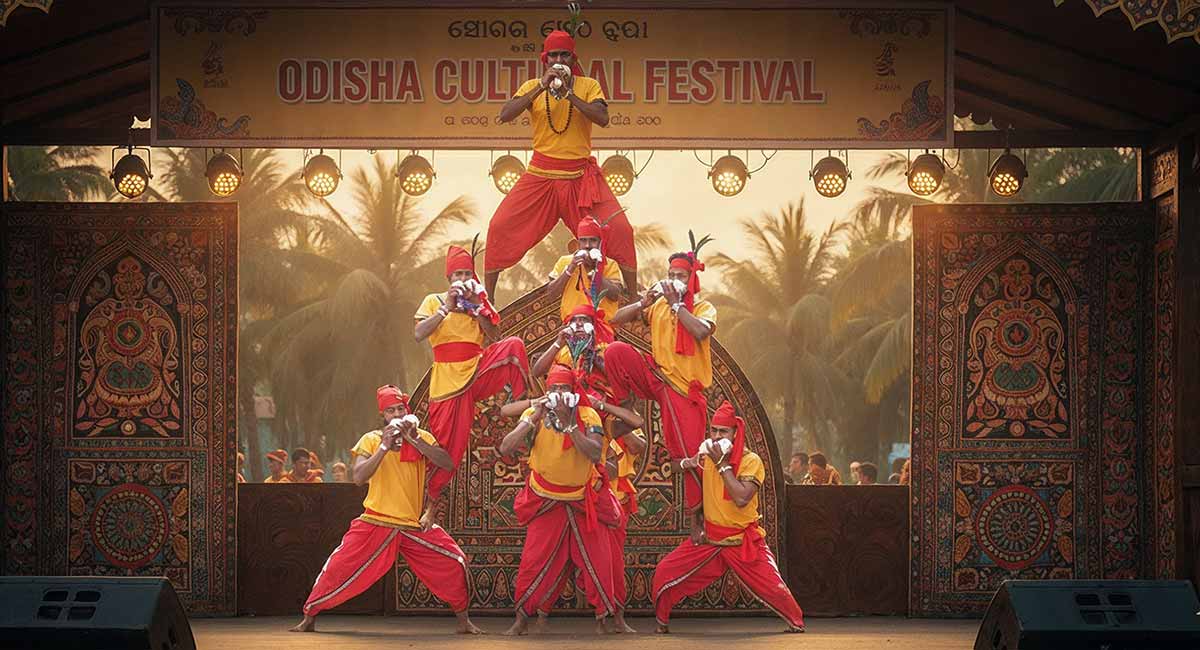
Jodi Sankha – A Traditional Conch Shell Performance
In the heart of Eastern India, particularly in the culturally rich state of Odisha, a profound and spiritually charged sound echoes through temple courtyards, religious processions, and vibrant cultural festivals—the stirring resonance of the Jodi Sankha. More than a musical performance, Jodi Sankha is a deeply symbolic expression of devotion, discipline, and cultural heritage, carried forward through centuries of tradition.
What is Jodi Sankha?
“Jodi Sankha” translates directly to “pair of conch shells.” Unlike the individual conch-blowing one might witness during aarti or ritual offerings in Hindu temples, Jodi Sankha is a synchronized performance involving two skilled players who blow conch shells in rhythmic harmony. The performers work together, creating an impressive auditory experience transcending mere ritual— a ceremonial art form.
Performing Jodi Sankha demands lung strength, breath control, synchronization, timing, and rhythm. Musicians often accompany it with traditional percussion instruments like the mridanga (a type of drum), while devotees chant mantras and sometimes perform coordinated dance movements. This elevates the performance from a simple religious act to a dynamic, multi-sensory spectacle.
People commonly perform this during significant religious events and festivals in Odisha, such as Rath Yatra (the Chariot Festival of Lord Jagannath), Chandan Yatra, and Bali Yatra. It is essential to create the spiritual ambiance and designate significant points in the ritual’s progression.
Historical and Religious Significance
The conch shell, or shankha, holds sacred status in Hindu tradition. It is considered one of the pancha ayudhas (five divine weapons) of Lord Vishnu, the preserver of the universe. People believe that the sound of the conch dispels evil, purifies the surroundings, and invokes divine presence.
The practice of Jodi Sankha closely connects to the Jagannath Temple in Puri, one of India’s most important pilgrimage sites. Historical records and oral traditions reveal that devotees have performed Jodi Sankha in and around this temple for centuries, and during major religious festivals like Rath Yatra, the Mahapatras (a traditional class of temple servitors) mainly showcased it by heralding the arrival of the deities with coordinated conch performances.
Historically, specific families associated with temple rituals have safeguarded and passed down the Jodi Sankha tradition. These hereditary performers are highly respected within Odisha’s religious and cultural communities, and their dedication has ensured the continuity of this intangible cultural heritage.
The Technique Behind the Art
At first glance, blowing into a conch shell may seem simple, but mastering Jodi Sankha’s art involves rigorous training and refined technique. Each performer holds a conch and either plays in unison or alternating rhythmic cycles, creating intricate patterns of sound that require complete coordination.
Key elements of the technique include:
- Lung Control: Continuous playing demands robust breath control and disciplined breathing techniques, similar to when playing wind instruments such as trumpets or bugles. Some performers can sustain notes for impressively long durations.
- Synchronization: The essence of Jodi Sankha lies in perfect timing. The two performers must stay in sync, producing alternating calls or playing harmoniously.
- Movement: Some performances are not static. Players may move in synchronized steps, circle the temple or a deity’s chariot, or perform semi-choreographed routines that enhance the visual impact of the performance.
- Costumes and Ornaments: The performers wear traditional attire such as dhoti, sacred threads, and forehead marks (tilak). These add a devotional and aesthetic layer to the act, emphasizing its ritualistic nature.
Skilled practitioners can also modulate the tone and pitch of the conch, creating complex sonic textures. This advanced artistry transforms the performance into a spiritually elevating experience for the audience.
Cultural Context and Modern Recognition
Though Jodi Sankha is rooted in religious practice, it has also become a cultural symbol of Odisha’s identity. It is regularly featured at state-sponsored events, folk festivals, and national celebrations, showcasing Odisha’s rich heritage.
For example, during the grand celebration of Bali Yatra in Cuttack or the grand Rath Yatra in Puri, Jodi Sankha performances are a key highlight. The sound of the conch shells, resonating across city streets or temple squares, adds an unmatched sense of sanctity and spiritual grandeur to these occasions.
Recognizing the cultural value of Jodi Sankha, the Government of Odisha, along with several cultural preservation bodies, has taken initiatives to support and promote the tradition. Organizers have featured the performance on Republic Day tableaux in New Delhi, at Odisha cultural expos, and during interstate festivals, where it serves as a unique and powerful representation of the state’s spiritual heritage.
Why Jodi Sankha Matters?
In today’s fast-evolving world, ancient traditions often face the threat of obscurity. However, art forms like Jodi Sankha are testimonies to India’s spiritual and artistic legacy. It’s not just a performance but a reflection of discipline, devotion, and cultural continuity.
The mastery required to perform Jodi Sankha involves more than physical skill; it reflects years of training, spiritual dedication, and cultural transmission. It is both an individual pursuit and a collective act of faith, making it a valuable thread in the cultural fabric of Odisha.
Preserving and promoting such traditions ensures that future generations stay connected to their roots. By supporting and celebrating Jodi Sankha, we honor the past and enrich the spiritual and cultural experiences of the present and future.
Final Thoughts
Jodi Sankha is a powerful confluence of ritual, rhythm, and reverence. Whether it resounds through the stone corridors of a centuries-old temple in Puri or across the festive grounds of a modern cultural fair, its sound carries a timeless message. It reminds us of the sacred power of music, the strength of tradition, and the deep spiritual heart of Odisha.
Traditions like Jodi Sankha anchor our cultural identity as we move forward in the modern world. They keep us grounded, inspired, and connected to the divine.