

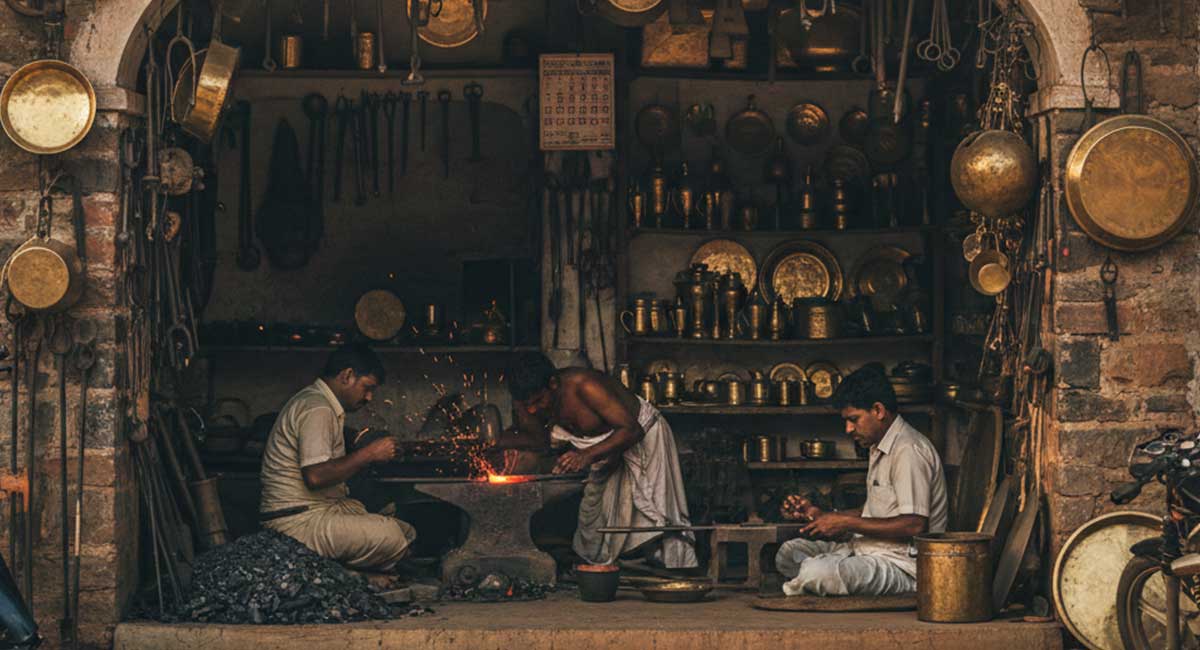
Blacksmiths and Brass Artisans
Western Odisha, a region rich in culture, history, and traditional craftsmanship, is home to a unique community of artisans. These include the brassworkers and blacksmiths who have been honing their crafts for centuries. Their works tell the story of a bygone era and continue to hold immense cultural significance in the modern world. This blog takes you through the fascinating world of blacksmiths and brass artisans in Western Odisha.
A Look into the Region’s Crafting Heritage
Western Odisha, with its diverse tribal culture and proximity to the region’s dense forests, has long been a hub of indigenous craftsmanship. The region’s artisan communities have developed unique techniques and styles, blending local materials with cultural practices. Blacksmiths and brass artisans, in particular, are some of the area’s most skilled and revered crafters.
These craftspeople have contributed significantly to the local economy for generations by producing domestic goods, everyday tools, and even ornamental things. What makes their work exceptional is the utility of their products and the intricate craftsmanship and cultural significance embedded in each creation.
The Blacksmiths: Shaping Iron into Art
Blacksmithing in Western Odisha has been a part of the region’s history for centuries. Blacksmiths are skilled in forging iron and steel into tools, weapons, agricultural implements, and ceremonial items. These artisans follow an age-old tradition that involves heating metal in a furnace, hammering it into shape, and cooling it in water or oil.
One of the most iconic items created by blacksmiths in Western Odisha is the “Dhankudi,” a traditional sickle used in agriculture. The sharp edge of the Dhankudi, which is expertly crafted, is perfect for harvesting crops like wheat and rice. Blacksmiths also create axes, knives, spades, and chisels, essential tools for the rural community.
The craft of blacksmithing is more than just a profession for many in this region; it is a way of life. The blacksmiths’ workshops are often located in rural areas, where they continue to follow the traditional methods passed down through generations. They craft items known for their durability and utility using locally sourced iron ore.
Even while blacksmithing is still a popular craft, younger people are increasingly choosing other career options over it. Several initiatives actively support blacksmithing in Western Odisha to preserve this ancient art form. Some artisans also adapt their craft to produce more decorative items like wall hangings, sculptures, and customized tools for urban markets.
The Brass Artisans: Creating Classic Beauty
While blacksmiths focus primarily on iron and steel, the brass artisans of Western Odisha specialize in working with brass. Brass crafting is an intricate art that requires a different set of skills and techniques. These artisans produce various items, from traditional lamps and statues to intricate jewelry and decorative pieces.
Making brass items involves melting brass and then pouring it into molds, which are cooled and shaped. The brass artisans of Western Odisha are renowned for their detailed work, especially in creating religious idols and artifacts. These artisans intricately carved statues of deities such as Lord Jagannath, Goddess Lakshmi, and Lord Shiva. These religious items hold great cultural and spiritual value, often placed in temples and homes across the region.
The brass artisans also create “Diyas”, the small oil lamps that play a significant role during festivals like Diwali and Kartika Purnima. These Diyas are made with delicate detailing, often featuring motifs from nature, animals, and traditional patterns. They serve as both functional items and beautiful decorative pieces that showcase the skill and creativity of the artisan.
Brass jewelry is another essential product of this craft. Artisans in Western Odisha make traditional brass bangles, earrings, and necklaces using casting and engraving techniques. They design the brass jewelry with unique motifs that reflect the region’s cultural heritage. These pieces attract high local and international demand for their craftsmanship and aesthetic appeal.
The Cultural and Economic Significance
Both blacksmithing and brass crafting have profound cultural significance in Western Odisha. These crafts are not just trades but represent the region’s rich history, values, and artistic heritage. The Western Odisha people’s everyday routines and rituals heavily incorporate the goods created by these craftspeople.
For instance, the blacksmith’s tools are indispensable in the agricultural community, while the brass artisans provide essential items used in religious ceremonies. The intricate sculptures and idols created by the brass artisans often find their place in the homes of devotees, contributing to the people’s spiritual life.
Economically, these crafts provide livelihoods for thousands of artisans. Many families in rural areas have practiced these trades for generations and have relied on the crafts as a steady source of income. Many craftsmen still practice their profession despite obstacles, including the growth of mass-produced goods and shifting market dynamics.
There has been a growing interest in promoting traditional arts and crafts in recent years, with various government and non-government initiatives offering support. This includes training programs, workshops, and marketing efforts aimed at helping the artisans reach broader audiences. Including these crafts in exhibitions and fairs has allowed artisans to showcase their talent to the world.
Final Thoughts
The blacksmiths and brass artisans of Western Odisha are the living custodians of a rich cultural tradition. Their works are not just items of utility but also art pieces that reflect the region’s history, culture, and spiritual beliefs. We can guarantee that this priceless legacy is passed on to future generations and preserve the centuries-old craftsmanship that has been a part of Western Odisha by encouraging and supporting these craftspeople.