

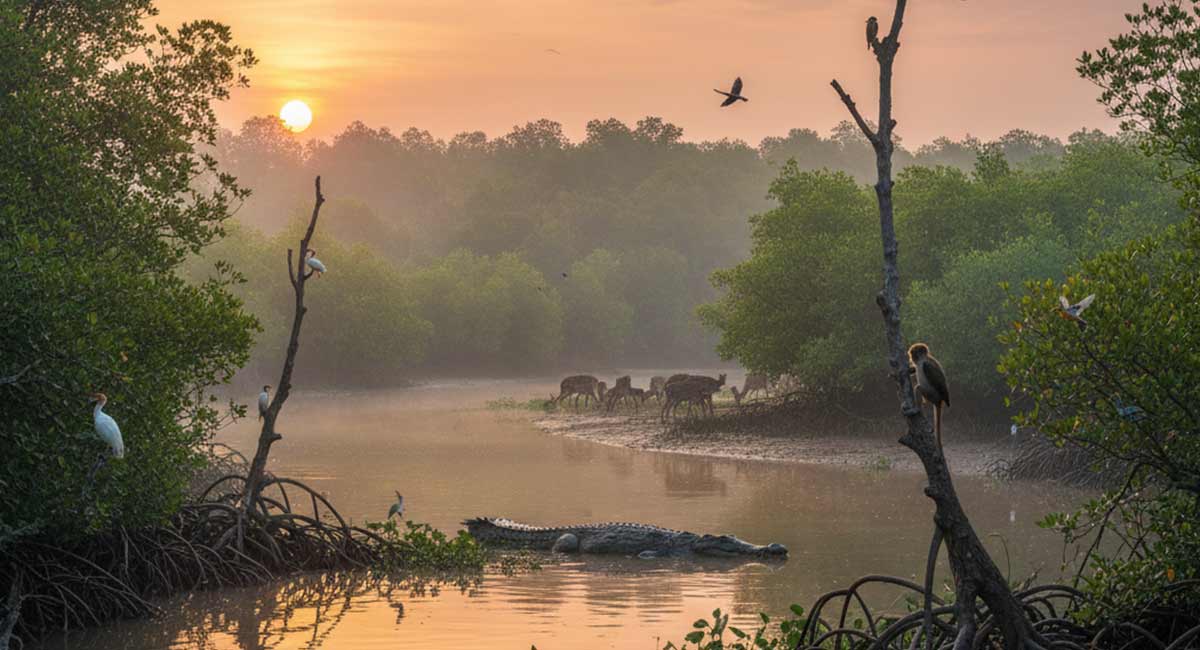
Bhitarkanika National Park in Odisha
In the northeastern corner of Odisha, Bhitarkanika National Park is a spectacular, often overlooked gem that offers an unmatched escape into the wild. With its lush mangroves, winding creeks, vibrant wildlife, and ancient cultural sites, this park is a sanctuary where nature reigns undisturbed. Bhitarkanika is perfect for eco-travelers, wildlife enthusiasts, bird watchers, and those seeking a break from the typical tourist circuits. It presents a raw, thrilling experience that transports you deep into India’s pristine natural heritage.
A Unique Ecosystem of Global Importance
Spanning 672 square kilometers, Bhitarkanika National Park is a key part of a larger ecological region, including the Bhitarkanika Wildlife Sanctuary and the Gahirmatha Marine Sanctuary. What sets Bhitarkanika apart is its dense and vast mangrove forests, the second-largest in India after the Sundarbans. The park’s complex ecosystem comprises salt-tolerant mangrove trees interspersed with tidal rivers, estuaries, mudflats, and creeks, forming a rich wetland environment that supports an impressive array of flora and fauna.
In 2002, authorities designated the park a Ramsar Wetland Site, recognizing its importance to India and global ecological stability. This status underscores Bhitarkanika’s role in maintaining the balance of nature and supporting biodiversity.
Crocodiles, Birds, and Diverse Wildlife
The crown jewel of Bhitarkanika is undoubtedly its saltwater crocodiles, some of which can grow up to 20 feet in length. These ancient reptiles can be seen basking on the muddy banks or gliding through the brackish waters. Bhitarkanika is one of the few places in the world where such large estuarine crocodiles live in their natural habitat.
Beyond crocodiles, the park is home to a rich variety of wildlife, including:
- Spotted deer and wild boars are often spotted roaming the undergrowth.
- Monitor lizards, some reaching lengths of over 5 feet.
- Indian pythons and king cobras make it a reptile haven.
- More than 300 species of birds, including colorful kingfishers, open-billed storks, sea eagles, black ibises, and migratory birds from Central Asia and Europe.
- The rare Indian smooth-coated otter and the elusive fishing cat.
During winter (November to February), Bhitarkanika transforms into a birder’s paradise, with thousands of migratory birds arriving to nest and breed in the mangroves and mudflats. These months also coincide with the cooler, more comfortable weather, making it the best time to explore the park.
The Boat Safari Experience
One of the most unforgettable experiences in Bhitarkanika is the boat safari through its network of creeks and estuaries. Operated from entry points like Khola and Gupti, these boat safaris allow visitors to venture deep into the forest’s heart. As you glide along the waters, towering mangroves form natural archways above you, and crocodiles lurk in the shallows. Sightings of deer drinking from the water’s edge, herons taking flight, and even the occasional python slithering across the banks excite the journey.
The boat ride lasts about 1.5 to 2 hours, providing a serene, immersive experience best enjoyed during the early morning or late afternoon. These times offer the advantage of witnessing the park’s birdlife without disturbing their nesting areas. The tranquil atmosphere and the biodiversity on display make the boat safari a quintessential experience for anyone visiting Bhitarkanika.
Historical and Cultural Heritage
Bhitarkanika’s cultural and historical significance is as crucial as its abundant natural beauty. Ancient temple ruins and artifacts can be found scattered around the park, indicating that this location was once a major religious and maritime center. These historical sites offer an interesting contrast to the otherwise pristine wilderness of the park.
The Dangamal village, which serves as the park’s core area, houses the Interpretation Centre and a Forest Rest House. This area gives visitors a deeper understanding of the park’s ecology, history, and ongoing conservation efforts. A major highlight here is the preserved skeleton of a massive saltwater crocodile, a striking reminder of the park’s reptilian giants.
Best Time to Visit
Between November and March, when the weather is milder and the migratory birds are in full force, Bhitarkanika National Park is the ideal place to come. This period offers the most comfortable climate for exploration, and the park’s wildlife is at its most active. Avoid the monsoon season (June–September), as heavy rains and flooding make travel difficult. The monsoon also brings vibrant greenery and marks the crocodiles’ breeding period.
How to Reach Bhitarkanika?
Bhitarkanika is accessible by air, train, and road, though some effort is required.
- By Air: Biju Patnaik International Airport in Bhubaneswar, roughly 170 kilometers from the park, is the closest airport.
- By Train: The closest railway stations are Bhadrak and Cuttack, from where you can take a taxi or bus to reach the entry points like Chandbali, Gupti, or Khola.
- By Road: Bhitarkanika is well-connected by roads from Bhubaneswar, Cuttack, and Bhadrak, and it takes 4–6 hours to drive to the park.
You need a permit to enter the national park. You can get it online or at the forest department kiosks near the entrance gates.
Final Thoughts
Bhitarkanika National Park is an unspoiled jewel that offers a different side of India’s natural heritage—one dominated by tidal rivers, ancient reptiles, and dense mangrove forests. Whether you’re silently gliding past crocodiles on a boat safari, marveling at the abundance of birds, or simply soaking in the quiet grandeur of the forest, Bhitarkanika offers a unique, off-the-beaten-path adventure.
If you want a deeper connection with nature, Bhitarkanika is the place. It offers a wild and wondrous escape. The experience is unforgettable. It’s a must-visit for eco-tourism lovers and wildlife enthusiasts.